by Liz Maceda
Kashiana Singh answered Liz’s questions on her work with NCPS, visions for the future of the organization as well as her own artistic practice. She has a craft workshop series coming next month at the Cary Arts Center, co-hosted with Sherry Thrasher that you won’t want to miss! Details here:
Whisk & Words: A Culinary Inspired Poetry Workshop and Reading Series
Facilitated by poets Kashiana Singh and Sherry Thrasher, this three-part workshop series will explore the intersection of food and poetry through craft, community, and creativity—concluding with a final reading. Full details at the link below. Registration closes Monday, April 13th. Register here.
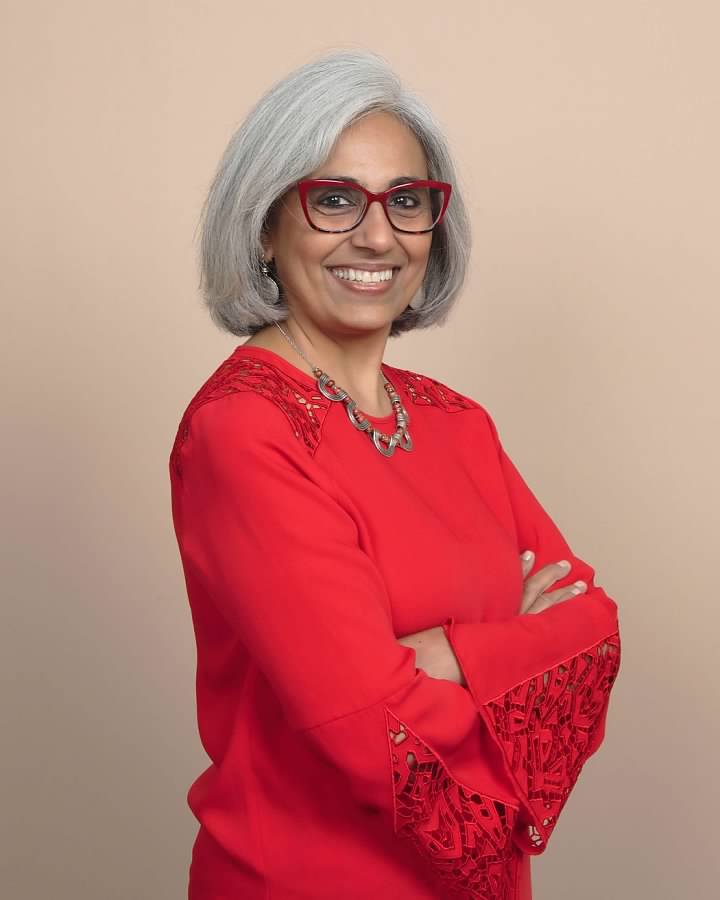
Kashiana Singh calls herself a work practitioner and embodies the essence of her TEDx talk – Work as Worship into her every day. She serves as a Managing Editor for Poets Reading the News and President of the North Carolina Poetry Society. Author of five collections, her latest Dualities of Albireo was released with The Poetry Box in June 2025. She has envisioned and hosted panels and poetry workshops on the theme of Food as Invocation and is excited for Whisk & Words with her friend Sherry Thrasher. Find her at www.kashianasingh.com/.
What first sparked your interest in poetry, and how did the initial inspiration evolve?
Poetry began for me as a way to make sense of transitions -place, body, relationships, intellectual and emotional arrivals and departures.
Over time, that instinct evolved into a practice. Poetry became not just a refuge, but a method of inquiry into the body, into memory, into the systems that shape our lives. It grew into devotion.
In your poem “How to collect blessings like a newborn”, what specific feeling or mindset did you want to evoke in readers?
I wanted to evoke a kind of radical softness, inspired by a god-like tadpole like a wrinkled newborn.
An openness to receiving without skepticism or urgency.
Newborns don’t question abundance; they exist in a state of complete trust. The poem asks: what if we could return, even briefly, to that posture? It’s an invitation to relearn awe, to notice the sacred in the ordinary.
How does your cultural background shape your poetry? In what ways does it appear – through themes, imagery, language or traditions?
My cultural background is foundational, it lives in the cadence of my lines, in the metaphors I reach for, in the way memory is layered rather than linear. It appears through food, through inherited rituals, through the texture of multilingual thinking. It also shapes my themes: migration, intergenerational silence, womanhood, and resilience.
You will lead a series of workshops entitled ”Whisk and Words”. What is the key takeaway you hope students will retain?
That food is not just sustenance, it is archive, language, political, inter-generational and a vessel for memory. If we can learn to pay attention to sensory detail, the smell of cumin blooming in oil, the rhythm of chopping, the stories held in the recipe, they give us access to a deeply authentic voice. The takeaway is this: your everyday life is already poetic
Why should poets attend your workshop series “Whisk and Words”? Why are workshops essential for the journey of young poets?
Poets should attend because my co-host Sherry Thrasher is masterful. Also because this workshop expands what we consider “material” for poetry. It invites them to trust their own histories and textures. In a workshop, you learn to listen deeply, to offer and receive critique, and to situate your voice among others without losing its integrity.
How does food influence your creative process or the content of your poems? What life experiences- whether difficult, joyful, or transformative – have most shaped the poet you are today?
As for life experiences, transitions, alternate roles and intergenerational gifts as well as trauma, coupled with locale and location have profoundly shaped my work. Each has taught me something about resilience, and poetry’s capacity to hold both rupture and repair.
What challenges have you faced as a poet- personally, artistically, or in the publishing world – and how have you worked through them?
One of the enduring challenges has been navigating spaces that don’t always recognize or prioritize voices like mine. There’s also the internal challenge of balancing a demanding professional life with a rigorous creative practice. I’ve worked through these by building my own ecosystems, through community, through editorial work, through platforms that amplify underrepresented voices. Persistence, for me, has meant both endurance and reinvention.
Which poet you’ve collaborated with or learned from directly has left a lasting mark on your work?
I’ve been deeply influenced by poets I’ve worked with in community spaces like Matwaala and through editorial work. More recently, studying with Tim Seibles has been impactful, his attention to the emotional architecture of a poem and his insistence on clarity without losing depth has stayed with me. Participating in Residencies, leading alongside team members of North Carolina Poetry Society ground me and remind me that poetry is both craft and conversation.
What influenced you to write “Haiku”? What emotional tone or quiet realization were you hoping to leave with the reader?
Haiku drew me in during Covid because of its discipline and its spaciousness. It requires a surrender of excess, a trust that the smallest image can carry immense weight. I was drawn to the quiet it demands. I am only a student, deeply influenced by haikai master Kala Ramesh and others that she has nurtured. In haiku, attention becomes a form of stillness. It is a life skill and not just a poetic form.
What is your vision for the future of NCPS? What roles would you like to see interns play?
My vision for NCPS is one of expanded accessibility and relevance, where poetry reaches beyond traditional boundaries and engages diverse communities across age, geography, and identity. I see interns playing a vital role in this evolution. They can bring digital fluency, fresh perspectives, and new modes of engagement, from social media storytelling to virtual programming.