
By Rishi Janakiraman
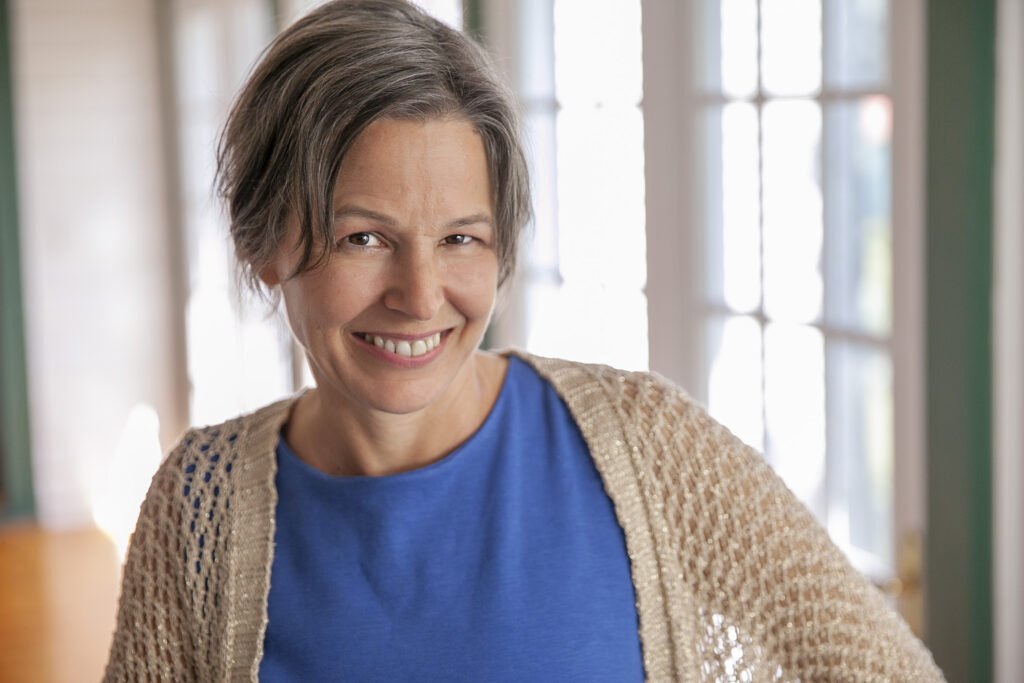
Cheryl Wilder reflects on her writing on home, shame, self-worth, and forgiveness, then further draws out how those themes have encountered her in various communities she belongs to. While her poetry is richly confessional, her commitment to seeking and uplifting literary spaces (like NCPS itself) shows her equally strong investment in the connective possibilities of writing. She also shares the story behind her companion poetry collections, the relationship between guilt and shame, and her evolving interest in communal forgiveness. Thank you for sharing so much honesty and insight in this conversation, Cheryl!
Cheryl Wilder is the author of Anything That Happens and its companion Singing Riptide (Press 53), which was supported by the NC Arts Council, a division of the Department of Natural and Cultural Resources, with funding from the NEA and Durham Arts Council, grants administrator. While working with NC architect Ligon Flynn, Cheryl adapted architecture’s spatial qualities to poem-making. She received residency at SAFTA for her work-in-progress about the experience. Cheryl is a NC Poetry Society board member-at-large, Burlington Writers Club student contest chair, and a For Alamance community leader. She received her MFA from Vermont College of Fine Arts. Follow her on socials at: https://www.youtube.com/@borncherylwilder, https://www.instagram.com/borncherylwilder/, https://www.linkedin.com/in/cheryl-wilder/
Cheryl is offering online and in-person workshops and retreats between November 2026 and April 2027, beginning with “Expressive Writing” at Persnickety Books in Burlington on November 17th at 4:30 p.m. For more information, visit https://bornwilder.com/.
How did you begin writing poetry and, more generally, creative work? How has your “artist origin story,” so to speak, influenced the themes you’re most drawn to now?
When I was in the fifth grade we had an assignment to write a poem in quatrains with abab rhythm. I don’t remember writing the poem, and I may have forgotten the poem if it hadn’t prompted my teacher to contact my divorced parents. It was 1984, milk cartons had pictures of missing children, and the “stranger danger” of the seventies was shifting to the recognition that a child would more likely know their assailant or abuser. Though I had never experienced sexual assault at home, the poem, written in first person POV, talked of a girl being abused by her father. My takeaways from my first experience with writing a poem have accumulated over time. First, after an awkward conversation with my father, for whom I already felt was drifting from my life, taught me the power of writing, but since I felt I alienated my father, I didn’t express myself in writing again until the twelfth grade at the encouragement of my English teacher. My parents weren’t good communicators, especially when it came to emotions, and I think the poem came from a need to understand what was going on in the world of other children and how that related to me. Looking back, I see that writing has always been my way of exploring my internal landscape and how it relates to everything else. Home and self-worth are consistent themes in my work. I start with the emotion, question, idea, and then find images in the world to flush out what I’m crunching on. Which is exactly what I was doing in the fifth grade.
You’ve been really involved, outside of personal creative pursuits, as a leader in various educational and artistic communities (namely, the Burlington Writers’ Club, NCPS, and Waterwheel Review, among others). In what way do you think your poetry is shaped by those communities? What have you drawn most from them?
When I am working in these communities, I feel like I’m amongst colleagues, and we’re part of a larger voice that says, writing is important, the arts are important. I am also aware that I once believed I was a pariah in society because of the car crash in my twenties where I was behind the wheel drunk and my friend in the passenger seat suffered a life-altering brain injury. Moving into community-led arts organizations came slowly and with deliberation; I wanted to find my place within the arts community. Waterwheel Review was a labor of love created with two close friends because we wanted to bring something beautiful into the world together. Unfortunately, we weren’t able to sustain it, but the process of creating and maintaining it fed a deep part of my creativity. I love being a writer, and I love seeing where and how I can use my creativity in new and different ways. Until now, my poetry has been very personal. It may be that I always write from a close first person POV, because that is how I process, but new material is brewing and since I have put so much effort into these communities, there is no question they have influenced my work as a writer, but I’m not sure about my poetry specifically. What I draw from these communities is inspiration, professional challenge, camaraderie, friendships, and hope.
When talking with friends who live in other states, I feel lucky to live in North Carolina where writing has a long history and lots of support at the local, regional, and state levels.
When you’re facing a creative/personal block, how do you think the larger literary community can help inspire you?
I’m getting ready to start a new project and I could use a jumpstart. The plan is to attend a weekly Writers Café, an accountability group sponsored by the Burlington Writers Club and held at Persnickety Books in Burlington. Usually, I write happily at home, but I need something new to jar me out of my routine. This is one way the community can help with blocks. Community gets me outside my head, provides new perspectives, and will cheerlead when I need it.
What has been the most rewarding experience you’ve had as an NCPS Board Member-At-Large? More broadly, what do you love most about NCPS?
Working with people willing to hold the torch for North Carolina poetry is inspiring. It’s a lot of work, yes. But, the only way for institutions to survive is for people to show up, pick up the torch, and carry it until they are ready to pass it on to the next person. I have benefitted from all the poets and artists before me who created the institutions and carried the torch. Working on the NCPS Board is one of the ways I can ensure future generations will have access to state-wide support and camaraderie. Community is so important. With so much flux in the non-profit sector, between funding issues and membership participation, NCPS has worked hard on the delicate balance of retaining members and attracting new ones. It’s not perfect; it’s not going to be. Trial and error is part of the process. I love how people see themselves as poets and stewards of poetry in community.
So much of your work in the arts involves North Carolina literary organizations and councils. How has your identity as a North Carolinian shaped you and your poetry?
I moved to North Carolina in 1993 when I was nineteen years old and only planned to stay for a year or two before going back home to Northern California and starting college. Nine months after the move, I was in the car crash mentioned earlier, which stopped short my plans. It took me years to call North Carolina my home because I didn’t feel like I belonged anywhere. It’s really only been in the last decade that I began to identify as a North Carolina writer. And that’s my own hangup. I have deep respect for people born and raised in a place they feel connected to, and the writers who can speak to that place from their bones. And I get it, when I go back to California, the terrain is in my bones in a way that I never realized when I left–the Redwoods, the valleys, the oceanside. At the same time, North Carolina raised me after the crash, a time when I was directionless. Lost.
Wiped of identity, I rebuilt myself on the North Carolina coastline. Living in Wilmington, Wrightsville Beach is the terrain of my early healing. Afternoon thunderstorms are part of my identity. In my latest book, Singing Riptide, place has a larger presence than my previous work. I received an Artist Support Grant from the North Carolina Arts Council so that I could travel back to California to write in place. It was healing to think deeply about the terrain that raised me and who I was when I left and thought I would return. And then I spent time writing at Topsail Island in North Carolina, thanks to a friend, and thought deeply about how the terrain healed me in my twenties. I still shy from saying I am a North Carolina writer; belonging and place are an extension of my themes of home and self-worth. Obviously, there’s more to uncover there. Funny enough, I can say with certainty that I am an Alamance County writer; a new identity I am enjoying. What I do know is that joining North Carolina literary organizations connects me to the literary landscape of the state, and if I can be a part of what makes North Carolina a thoughtful, inclusive, thriving literary landscape, then that is enough for me.
Many of your poems have such a rich confessional tone to them (one of my favorites, “In Its Distance,” uses first-person voice in such a controlled way). How do you think poetry can be a place for emotional vulnerability and processing one’s emotions? Do you think, at times, poetry is not enough to do so?
For me, poetry is the perfect container for emotional vulnerability.
When we process our emotions, whether it is grief, loss, or love, it’s not linear. It’s not always clear. And we are always processing while we live our daily lives. A poem’s ability to use metaphor and make leaps is part of a poem’s power to connect the elusive or unsayable emotions to something tangible.
To use “In Its Distance” as an example, passionate love is described as a hurricane, and then in the end we’re flying over the country looking at lights huddled around bodies of water. I think you said it when you mention control. I’m a big fan of Gregory Orr’s work, and to those who know of him, you won’t find that surprising. In his book, Poetry as Survival, he talks about writing the lyric poem as a form of putting order to disorder. And then once you’re done, there’s this made thing that is now outside of you; separate from you. The act of ordering vulnerability into a poem is an act of putting order into ourselves, like cleaning out our minds or mending a tear in our heart. I have physically felt lighter after writing a tough poem; like setting down heavy luggage after a ten story climb. As much as writing poetry has provided me the space to process emotions and sit for long periods with my vulnerability, I also need to move my body. I often think of my body as a rain stick after a vulnerable writing stint, and I need to move around so the emotions can trickle through me and settle. In this way, my mind and body are working together. Sometimes the movement is walking around wiggling my arms and legs, other times it is cleaning, gardening, working out, or taking a walk. Whatever it is, I need to move in order for the processing to run its course.
You’ve spoken extensively about the relevance of shame in your work. In what way has poetry allowed you to contextualize shame and lead you on the road to self-forgiveness?
Poetry is a practice in slowing down, of being an observer. For me, it is a practice in mindfulness. Shame was overwhelming. Gargantuan. I didn’t understand it, and for a long time, I didn’t have a name for it. Shame is sneaky so it can be hard to see. I lived with a dual internal narrative that I was the worst person on the planet and I deserved a second chance. Poetry slowed me down–one word at a time–and helped me tackle shame by ruminating on personal experiences–small moments that helped me see the nuance of where shame lived and how it showed up. After decades of focusing on shame, I switched to focusing on forgiveness. This wasn’t something I had planned. At the end of my book launch for Anything That Happens, where readers don’t get resolution to the shame, the audience kept asking about forgiveness. I had forgiven myself at that point, but a reader wouldn’t know. That night, I decided my next book would be about forgiveness. We can tie this back to the importance of community. The audience at the book launch–friends, family, writers–helped me see the value in giving self-forgiveness as much attention as shame. Ruminating on forgiveness through writing poetry did the same thing for me that ruminating on shame did for me. Perhaps, it did more, because the process allowed me the time and space to further accept and embrace forgiveness in a way I hadn’t done yet. I owe so much to the group of people at my launch. And now, I have two representations of the dual narrative I lived with for so long: one, where readers see why I would believe I was the worst person on the planet; and two, where readers see my process of self-forgiveness.
In your poem, “Xing” you discuss how parenthood is almost at odds with guilt over the past. It’s such a beautiful, reflective piece that represents the tension between a future with so much joy and a past marred by regret. How do you think that joy and self-forgiveness are related in your work? Can guilt, at times, be the thief of genuine happiness?
There is a stark difference between guilt and shame. I like Brené Brown’s definitions: Guilt = I did something bad. Shame = I am bad. Guilt is a healthy emotion that helps us learn from our mistakes or brings us closer to others through reconciliation. Shame is a thief of genuine happiness. Guilt is temporary. Shame takes root. I do think joy and self-forgiveness are intertwined. Grievances keep us resentful or critical; think holding a grudge. Dr. Martin Luther King Jr. said, “Forgiveness is not an occasional act; it is a permanent attitude.” Forgiveness is the process of seeing another person (or yourself) and accepting their humanity. In this way, forgiveness creates new pathways toward belonging and community, which then opens us up to empathy, compassion, and joy. The main thesis of The Book of Joy is how does the Dalai Lama and Archbishop Desomnd Tutu stay joyful when there is so much suffering in the world. Spoiler alert! Helping others. Helping those they can help. Yes, they do a lot of other things, and compassion is a huge component of their dispositions. But in the end, they say, when you feel bad, overwhelmed by the world’s suffering, go help someone and you will feel better. It’s hard to help others when self-worth is so low. So, forgiveness is crucial in helping people first help themselves so they can turn outward to other people, which will nurture belonging and connection, ultimately creating community. All those years, I didn’t just live in shame. I had great joy too. But it took years to create a resting state of joy in my life, which is where I live now. “Xing” was reconciling the tension and I wasn’t going to give up. Ever. Because there was this person I loved and wanted to care for to the best of my ability. All of this to say, I wouldn’t have work if it weren’t for forgiveness. And my work is evolving because of my dedication to joy.
On the whole, what was your experience writing and publishing your poetry collections?
The first collection was a long road so I will tell the short story. It started in 2005 with one poem. I was in UNCW’s BFA program and it was the very last poem I wrote before graduation. The class was shocked after spending two years with my work and never knowing the crash story. Then, in 2008, I started graduate school where I wrote more poems about the crash alongside other poems. Then a strange thing happened. In 2010, after graduation, I couldn’t write poetry. All I could do was think in sentences. It was frustrating and for a month I wrote nothing. When I finally gave in, I sat down and wrote twenty pages of prose. Over the next few years I would write over 200 pages. The very last thing I wanted to do was write a memoir, but it seemed like that was what I was supposed to do. Then, I had twins in 2013. In May of 2017, I took out crash-related poems from my graduate school creative thesis and published the chapbook What Binds Us. With the crash-related poems now on their own and over 200 pages of prose on the subject, I wasn’t sure which avenue to take: poetry or memoir. Later in 2017, I met Kevin Watson of Press. Talking with him helped me decide on poetry. I took the 200+ pages and scraped them for images and ideas. And then the hard work began. It was equally painful and relieving. I cried a lot. I learned that I needed to “empty out” through prose; write myself through the story before I could see myself on the other side. The second book was more streamlined, mainly because I had a goal. Also, because I had experience. I cried while writing the second book, but the tears were more from seeing how far I had come. I had focused so long on what I had done wrong, it was a relief to have time to focus on what I got right.
As far as publishing, it was a wonderful experience. I met Kevin Watson, publisher of Press 53 at a North Carolina Writers Network conference. Press 53 had just published two of my poetry mentors, so I struck up a conversation with Kevin about them, then he asked about my work. I had the chapbook with me and gave him a copy. The next day he found me and said to keep Press 53 in mind when I was ready for a full-length collection. After that, I met one of his poetry editors, Tom Lombardo, and he was also interested. I submitted a rough draft and worked on it with Tom, and published Anything That Happens in 2021. When I knew I would write the second book as a companion to the first, I contacted Kevin and he was interested in the concept of companion books. I really wanted the two books to have the same home. Kevin worked really hard at getting me a publication schedule that worked for both of us. He believes in his authors and supports them as best he can with a small press. Kevin lives about an hour away and we meet for lunch a few times a year. He might not know this, but he taught me the value of claiming myself as a local writer, which is why I connect with being an Alamance County writer. It’s magical to find support so close to home. Another perk to living in North Carolina.
What direction do you see your creative work going in the future, beyond forgiveness? What inspires you today?
Over the past three years, I have worked with a local initiative, For Alamance. Sponsored by Impact Alamance in partnership with The Harwood Institute for Public Innovation, the initiative’s goal is to inspire community members to work together despite their differences to build a better Alamance. Community work has become very important to me, which is why I serve in various literary organizations. The community, and learning to catalyze people to take action on what matters, is deeply inspiring. I’m in a generative phase and not sure where some work is going. That said, I have a nonfiction work-in-progress about my time working for an architect while in graduate school, and how architecture informed my poetry and helped me think differently about the subject of home. This project has been gestating since 2010. The topic of forgiveness isn’t going anywhere. I’m thinking a lot about the need for mass forgiveness. There’s a lot of mistrust in society today and one way to bring people back together is forgiveness: ourselves and others. In this area, I’m flushing out, and building upon, the themes of my poetry books and aligning them with what I’m learning in the community work. When I was twenty three, I had started my healing process and then had my first child. I knew the road to recovery would be long. I made a goal for my creative life to help others who struggled with shame. If I could help just one person. Using creativity to help others, I suppose, is my life’s work. My future work is simply a continuation of that goal.