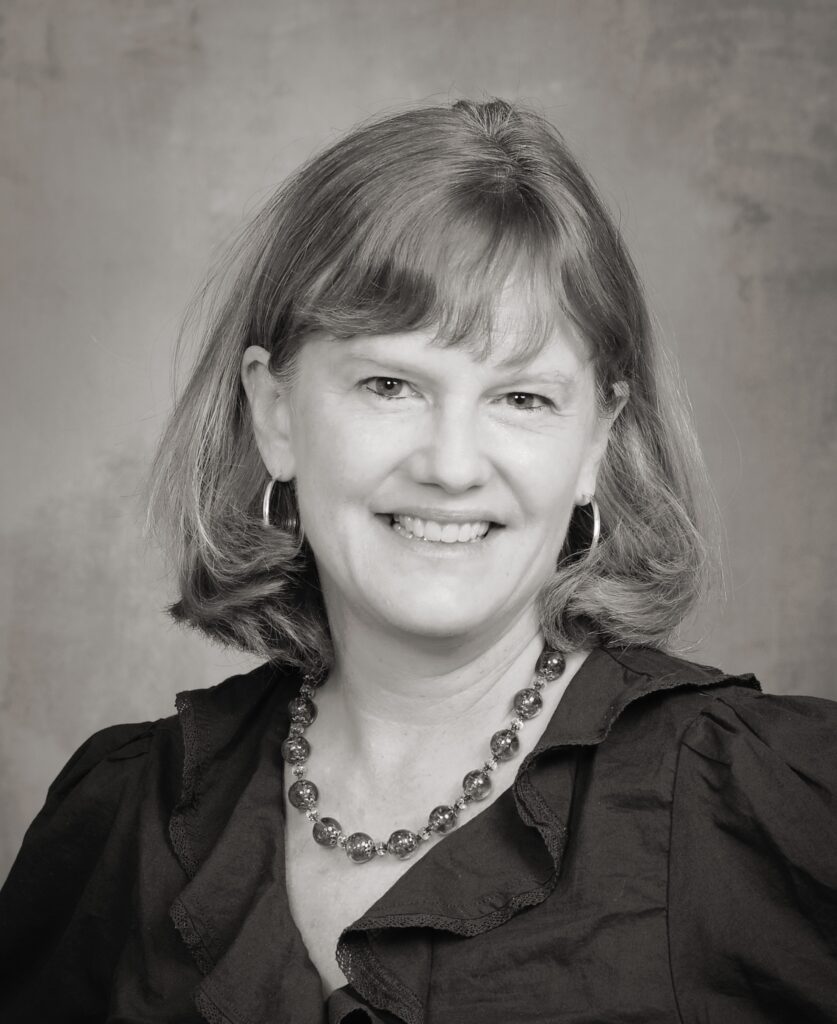
Liza Wolff-Francis is a poet, activist, and the former Poet Laureate of Carrboro. Her past works include her chapbook, Language of Crossing, and her most recent release, 48 hours down the shore, which delves into topics of ecology, politics, and what it means to be patriotic. Described by Joan Barasovska, as a “remarkably big-hearted collection,” 48 hours down the shore delves into what “Merica” means, set on the alluring Atlantic City beach, encompassed by casinos and harsh truths. Read more here.
When she’s not writing poetry, Liza can be found going to museums, hiking, and enjoying nature, as well as supporting other poets in the NC area. Liza is an activist for women’s rights, sustainability, freedom, and of course, poetry for all. Learn more about her journey from her biggest inspirations to Poet Laureate in this exclusive interview with Liza Wolff-Francis.
What made you fall in love with the topic of ecopoetry?
I write poems about all kinds of things, but I have been really concerned about the state of our planet and climate and have found that ecopoetry helps me work through some of my feelings about it and allows me to have a voice about what’s happening so hopefully people will pay attention. I believe that poets help give voice to the important issues of the day and in our world right now, climate chaos and the rising temperature, because of our excessive use of fossil fuels, is the most pressing issue of our time; we have to talk about it.
How did you discover slam poetry, and how did this experience impact you as a performer? Slam poetry was my community at one time, years ago. I don’t slam anymore, but it shaped my reading and performance of poetry by encouraging me to bring my poetry to the stage in a new way. I also saw how diverse communities and voices can come together through poetry and how competition could help improve a person’s craft. I also really liked that you could still be friends with poets who you might win or lose against in the game of slam.
Liza Wolff-Francis
Reflecting on Carrboro Poet Laureateship:
When you became Carrboro Poet Laureate in 2023, what goals did you set for yourself in this new role?
I knew I wanted to bring poets together in community and to strengthen the community through poetry. I knew I wanted to have opportunities for people to write and share and to read their poems and listen to others. My goals as Carrboro Poet Laureate were grounded in that. Most of my friends are poets. I wanted to meet more poets. I wanted to have poets come together for fun and to listen to what poets have to say.
During your time in the role, you fostered an environment where diverse voices were heard and also taught multiple workshops to broaden the reach of poetry in Carrboro and beyond. What drew you towards these causes? Tell us about a special moment with a poet that stood out to you.
Poetry, literary arts, and the arts in general, I believe, are a place where we can address history, difficult topics like racism, sexism, homophobia etcetera.
I believe all people need the arts, poetry especially, and that people can come together to share their experiences, ideas, thoughts and to listen to others who have different experiences and thoughts and ideas and from that sharing and listening, we can build community and understand each other more. I love knowing all kinds of people. It would be boring to have everyone be just like me. I want to hear what others think and experience. I want to get to know them. I don’t think I’m alone in that. We need each other. Poetry is one way to come together and it’s an important way. I don’t know if there’s one experience that I can choose.
Liza Wolff-Francis
There are so many moments that stand out, that feel important, so many connections with different poets in the community, whether I have known them for a bit or they are new to me. One time I’m thinking of is when we were doing a show with musicians playing in the background and I hadn’t done a lot of that and it was so fun to have their music there as background for the poetry, to meet the musicians, and I met other poets who were there to share as well. It felt like a fun overlap of arts and the music added to the vibe of the poetry and the voices who were sharing. That was cool!
As Poet Laureate, you helped organize theWest End Poetry Festival. What was your vision for the event, and what did the behind-the-scenes work actually involve, versus the parts people saw on stage?
I am part of the Carrboro Poets’ Council and as a group, we help organize the festival with The Town of Carrboro. First off, we want [the] community to come together. Next, we want to bring a fun, free, engaging festival to anyone and everyone in the area. And we want to put poetry center stage so people can engage with it as people with varied experiences with poetry, whether that be a lot of experience, no experience, somewhere in between, or poet ‘hopefuls.’ The behind-the-scenes is planning, thinking about who we can invite, doing the inviting, and getting things coordinated with the Town of Carrboro to get spaces set for us. The Town does a lot for the festival, supporting it financially and also making the spaces nice, setting chairs up and the lights and microphones and food. The Poets’ Council is lucky to have them doing a lot of the heavy lifting and being so supportive.
You were part of the Peace Corps in Costa Rica prior to residing in Carrboro. Tell me about how that experience impacted you as an activist and writer.
I was in the Peace Corps years ago in Costa Rica. I worked with youth in a very poor urban area outside the capital, San Jose. I taught literacy to mothers who couldn’t read, I read to kids, I colored with them and did drawing and played games with them. I set up summer camps for kids. I wrote for the two plus years I was in the Peace Corps. I did The Artist’s Way and wrote “morning pages.” I wrote about my daily life, about my experiences.
The Peace Corps led me to work more with Spanish speaking populations, especially immigrants in the U.S. I have interviewed people who crossed the border without documents, written a play about it and had it performed in three cities. I have done writing workshops on the border, in South Tucson with Americans learning about border issues, and in Nogales, Mexico with immigrants who had been caught by border patrol and dumped back over the border in the middle of the night. My chapbook Language of Crossing came out in 2015 and is now out of print. It’s a book of border poems that looks at the complicated border we have with Mexico and what the militarization of that border has done. This is a long round-about answer to say the Peace Corps has greatly influenced my life. It was a long time ago, but I still return to that neighborhood about every two years, I still have close relationships with people there, and I feel the Peace Corps program is one of the wonderful international programs America has and hope it continues.
You are one of many poets who contributed to the poetry bookStained, a manifesto of women’s experiences with menstruation, from youth to menopause and beyond. What madeStainedfeel like a project you needed to be part of, and how does it fit into your feminist work more broadly?
I was thrilled to have a poem in Stained. It’s a great collection of writing about a very underappreciated bodily function that leads to human life. In addition to Stained, I have interviewed over one hundred people who have or have had menstruation at some point about their experiences. It is now a whole book I am shopping around for a publisher. I believe that especially in this time of voices being silenced, women’s rights being undermined and taken away, menstruation is an access point to understand equity as well as to fight for body autonomy.
The book I wrote is an effort to remove shame and reclaim control of the narrative of menstruation. All people who bleed and who have bled, desperately need to reclaim that narrative right now, because it is directly connected with our rights and access to opportunities and because it is linked to ideas that lead to violence against us. Menstruation has been overlooked, silenced, and used to shame women and others with wombs. We need to listen and believe people about their bodies and give people who bleed options, information, and choices.
If we are in control of the narrative about our bodies, we will have more access to period products, we will have better health care, fewer unwanted pregnancies, and there will be less sexual violence. Major reasons to talk about bleeding are: to educate and inform, to celebrate, and to uplift people with bodies that bleed. Stained helped bring bleeding into the larger conversation and hopefully continues to bring the narrative of bleeding back into the voices of those who bleed or have bled.
Suppose you’d never encountered poetry as an option. What do you think you’d have built instead to hold the same impulse?
Ha! Other writing, I suppose. Maybe visual art, like drawing or working with clay. I do write prose and I love to look at visual art. I love to go to museums and galleries. I also love hiking and being out in nature, especially in the forest or at the beach. But those are things I already also do. I often ask, what do people do if they don’t write, if they aren’t poets? What is their creative outlet? And what do they do? I guess, sports, but that’s not quite the same. I know not everyone writes and I know people do other things, but I’m not really sure what other people do if they don’t have writing or the arts. It’s like I can’t quite imagine it.
You write about many issues, including immigration, gun violence, feminism, and sustainability. Do you ever write these poems hoping to change someone’s mind? How have you seen readers connecting with these themes in your poetry?
Rather than change someone’s mind, I think I want to call attention to things that are happening that sometimes we seem to not talk about. On one hand, they are all around us and ever-present and on another hand, we are strangely quiet about them, almost afraid to bring them up. Or perhaps, we are weary of them, but I think we have to continue to bring them up. There are definitely some peoples’ minds who I would like to change. If my poetry had that kind of influence, that’d be awesome, but mostly I want to bring the topic to the table and encourage dialogue and feeling, especially because these things often wash over us and we have little room for feeling all we feel about them.
As a poet, you have made a strong effort to expand the impact of writing through teaching creative writing workshops for over a decade. What’s the most common block you see in students who say they want to write poetry but feel like they can’t? How do you overcome your own writer’s block, and what is your method for helping others?
I think anyone who wants to write poetry can. I think that to write good poetry, you need to study and read other poets. People sometimes get in their heads or feel they aren’t good enough. They get imposter syndrome. We all get that. I encourage people to push through any trepidation they have about writing, to push through any worries they have that they don’t have something to say. We all have something to say.
Timed writing can be a way to help with any kind of “block” and you can even do that by yourself. Sit down to write and put the timer on for ten minutes and don’t stop until the timer goes off. If you don’t know what to write, say that or notice what’s around you, notice the shapes, the colors, notice your breath. Write whatever comes to mind.
You have been a longtime contributor and member of the North Carolina Poetry Society, and we are honored to have received your poems “Lucky” and “Becoming Sculpture” for Poetry in Plain Sight. What lines from these poems resonate with you the most?
From the poem “Becoming Sculpture,” I like the line, “Let me take shape, move from one being into another for something new.” To me, it speaks of growing in the self, allowing myself to learn and to continue to grow.
In “Lucky,” I like the line: “I’m lucky the green came to me, welcomed me home like there’s no one who wishes to be here who can’t be here, loving the Earth, wanting us all to feel this green like gold.” I like this line because it reminds me that we are of the natural world, we all are.
What has always been your vision for youth poets and expanding youth interest in poetry at NCPS and beyond?
Oh! I know a lot of young people write poetry, but if they don’t have a space to share it, they may not continue to write. I wrote poetry as a teenager and was invited to an open mic where I shared it once. That was memorable, but I was also the youngest person there. I think that teen poets should be included as much as they want to be in all poetry events, but that it also would benefit them to have other teens who write poetry to hang out with, to share with, to learn from, to get to know, to be friends with. Teen led events, maybe a teen council, would be great, to include and encourage teens to write. And for teens who don’t yet write, to know they can, that their voice is important!
48 hours down the shore questions:
Tell me more about your writing process for48 hours down the shore. From your previous books to your most recent release, how has your mind during writing changed and evolved over time?
I went to Atlantic City for a brief jaunt with two other writer friends and wrote that manuscript. I, of course, had to go back and revise it, but it became a book from that trip. I wanted to write about our experience because it was great and I wanted to write about that place. I wanted to write a poetry beach read about America.
The book often dives into topics of what America means, building off of your experiences in Georgia, New Jersey, New Mexico, California, and North Carolina in poems like “Who I been now where I go.” As you ask the question “…it’s all just America, isn’t it? Aren’t we?” what have you found on this topic of American identity through this text, and what do you still wonder?
There was so much going on in the world to reflect on, especially in the context of that place. The gorgeous beach with imposing casinos alongside. The names of all the streets are the names of places in the Monopoly game. It was like a metaphor for capitalism without me even making the metaphor. It was just so symbolic in my mind of how our country is, this gorgeous place with people living their lives all in the context of capitalism and everything that comes with it. I think it gave me a view of certain institutions playing out in an interesting way all right there encompassed in that small place. And, of course, we see America all over America. I wonder if you could write a book about America based in any place. Maybe. I’m not sure. I’m sure there’s commentary to be had anywhere and everywhere, but Atlantic City seemed to hold a lot of symbolic things about how this country works and so did the time and events happening in the world when I was there.
Tell us about some of the upcoming projects that you’re working on and where our members can support you.
I have a book coming out through Unsolicited Press in November (2026) with another writer, Brenda Beardsley, which I’m excited about. It was a poetic collaboration during the pandemic, but a lot of it feels like it could have been written yesterday. So, we’re both really excited about that and have readings and collaborative writing classes set up connected with its release.
I also have a non-fiction book that I am shopping around now that comes from interviewing over 100 people about menstruation. It is called Bleeding: Ten Years, 100 Voices. Hopefully I’ll find a publisher soon for that work. I think it’s really important.
And I am writing and always looking to support poetry and the arts in North Carolina and beyond.
I am on Instagram @lizawolfffrancis and on Facebook at Liza Wolff-Francis and my website is lizawolff.com. I can be found in these places online or in the Triangle of N.C. being a poet at large.
Thank you for your time, Liza!
Liza Wolff-Francis, 8th Poet Laureate of Carrboro, N.C. (2023-2025), is a writer and poet with an M.F.A. in Creative Writing from Goddard College. She has taught creative writing workshops for over a decade and her prose and poetry have been widely published. She wrote the play Border Rising about immigrant justice and the history of the Mexico- U.S. border; it was performed in 2010 in south Tucson, Silver City, NM and Albuquerque, NM. She was on the Albuquerque Poetry Slam team in 2008, was co-director for the 2014 Austin International Poetry Festival, and now works organizing the West End Poetry Festival with the Town of Carrboro and the Carrboro Poets Council. Her poetry has been nominated for Best of the Net and has most recently appeared in The Bombay Literary Magazine, Cider Press Review, Unbroken: Prose Poems, and the Phare. She has written poetry book reviews that have been published on Adroit, Compulsive Reader, LitPub, and in Tupelo Quarterly. She has a full-length book: 48 hours down the shore (Kelsay Books). Her collaborative manuscript with Brenda Beardsley, “sky they yearned to call mine” was a semifinalist for the 2024 Donna Wolf Palacio prize and is forthcoming from Unsolicited Press in November 2026.