
by Maya Thomas
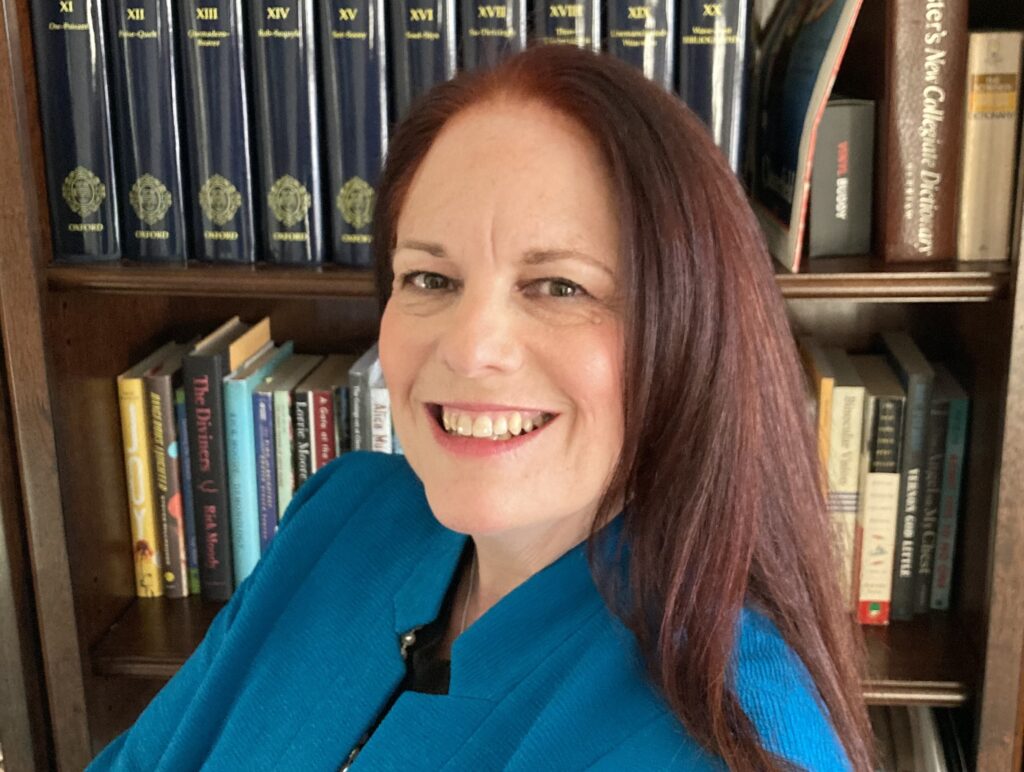
Maureen Sherbondy’s work has appeared in many journals, including Southern Humanities Review, Calyx, Oakland Review, and New York Quarterly. She has won the Hart Crane Memorial Poetry Contest, the North Carolina Poet Laureate prize, and other awards. The Body Remembers is Maureen’s 12th poetry book. Maureen has also published short stories and a young adult novel. She lives in Durham, NC. Website: www.maureensherbondy.com
In my interview with Maureen Sherbondy, she gave me an impressive view into the importance of staying connected to yourself in the form of “the mind-body connection,” but also staying connected to those around you. Her inspirations include memory, family, and art. She mentions how “Art and poetry go hand-in-hand.”
How did you first become interested in writing poetry? Did anyone encourage or influence you?
Both my mother and my grandfather encouraged my interest in poetry. I began writing poems on my own at seven. My mother bought the book Reflections on a Gift of Watermelon Pickle for me. I memorized poems by Langston Hughes, Hilaire Belloc, John Ciardi, and others. When I stayed in Canandaigua, NY with my grandfather the summer I was eight, my grandfather paid me five dollars to write a book of poems (more than I get paid for most of my work now!). After he died, I found my book in his dresser. He had saved it all those years beside his important items.
You recently released the poetry collection The Body Remembers. What was your guiding inspiration for these poems?
I have always been intrigued by the mind-body connection (especially in females). I wanted to explore the impact that body has on memory and that the mind has on the body.
Maureen Sherbondy
You reference artists such as Pablo Picasso or Salvador Dali in your 2020 poetry collection Dancing with Dali. What do you find inspiring about ekphrasis poetry as a form?
I am a visual thinker. My poetry begins with both music and images. Art has always played a big part in my life as a creative person. My oldest brother studied painting at RISD. Though we had no money, my mother took us to museums. My grandfather was friends with Romare Bearden (our family has some of his collages/paintings). As a child, my grandfather took me with him to visit these artists. Art and poetry go hand-in-hand. A picture is worth a thousand words.
I am drawn to the surrealist painters. My writing is often surreal.
Maureen Sherbondy
Your poem “And if the House” was featured in PIPS. What advice would you give to future applicants for this program?
Consider the audience. Send a short poem that packs a punch. Send something that has a universal theme.
As a retired community college professor, how has teaching impacted your perspective in your poems?
Teaching has taught me empathy. I retired from community college teaching, but am still a teacher in my daily life. My students shared personal stories. I have been inspired by their stories and their challenges. We all need to listen and observe more.
Do you have a favorite poet to teach? Or any advice for new teachers?
Realize that students are hesitant to share their words at first. Do whatever you can to show an understanding of who and where they are. Start with easy prompts. Start with teaching them how to respond to a visual.
Find authors that they relate to. I often carried in a pile of poetry books from my personal library and did a sort of writer matchmaking after I knew something about each student. Let them read widely. Let them find a poet they connect with. Realize that students might have a preconceived notion about what poetry is. Make it fun!
Maureen Sherbondy
Show them videos of performance poets (Patricia Smith and others). I like sharing some of the animated videos of Billy Collins. Students like to see the animation. They also like to hear the poems read in the author’s voice. I like to introduce poets from diverse cultures.
You wrote a poem titled “October in the Family Cemetery” where you describe how your family still feels alive in the cemetery. I especially enjoy the line, “banter lingers all around us.” What led you to write this poem, and why do you believe it is necessary to write about human experience?
Human experience is what connects us as human beings. What else is there? Love, friendship, community, grief. (Stop looking at screens!) I went to a family reunion in Canandaigua, NY with my uncles and my cousins. We stopped by the family cemetery to visit my grandparents and my uncle. Jews leave stones on graves. I did this. I can still hear the voices of my deceased family members in my head. We lost many family members in the Holocaust. I write so that these relatives (killed way too early) can have a voice.
How has your process for writing poetry changed throughout the years? What has been the most impactful?
I take more risks with my writing. I write across genres. My short story collection, Revelations, will be published in November by Serving House Books. I have been writing prose poems lately. This is a perfect merging of my poetry and my prose. I now explore a topic in a series. Years ago, I would write one poem at a time (various topics). I now explore one topic for a long period of time. This also makes it easier to put together a cohesive manuscript. Sometimes I take the last line of my poem and start a new poem with that one line.
Which poets are you currently inspired by, and are there any you would like to recommend?
I am inspired by everyone and everything. Some favorite poets right now: Diane Seuss, Bob Hicok, Robert Bly, Tishani Doshi, Terrance Hayes.
Do you have any favorite North Carolina community spaces that you would recommend for poets or writers? Such as open mics or workshops?
The Weymouth Center is a great place to stay and write. They offer residencies for NC writers. I attend various reading events at Flyleaf Books and the NCPS Reading Series at McIntyre’s Books. Page 158 Books in Wake Forest is one of the most welcoming places for NC writers. The owner, Suzanne Lucey, is how all independent bookstore owners should be (involved, kind, supportive). I attend readings there. I also attend conferences in our state. The NCPS is wonderful. I can write anywhere. Since my husband is also a writer, we create our own retreats at the beach and in the mountains.
I am curious to hear about your future plans in poetry. Are you working on any publications, and will you be at any events?
I finished a prose poetry manuscript. I hope to get it published somewhere. I still like to teach workshops (and hope to continue to do that). I have been invited to participate in the 2026 Louisville Book Festival on October 24th. I give readings when people reach out to me. I also plan on giving readings for my forthcoming short story collection. I have poems and flash fiction coming out in various journals this year. Follow my FB/Instagram pages to learn more. I also have a website: www.maureensherbondy.com
Thank you so much for the interview!