by Rishi Janakiraman
Cynthia worked with Distinguished Poet Gideon Young this year and took the time to reflect on what participation in the Gilbert-Chappell mentorship series has meant for her and her writing. She is a high school junior, and her school’s poet laureate. After graduation she hopes to work as an agriculture teacher. Thank you, Cynthia for sharing your gorgeous poetry and insightful craft discussion with our intern Rishi.
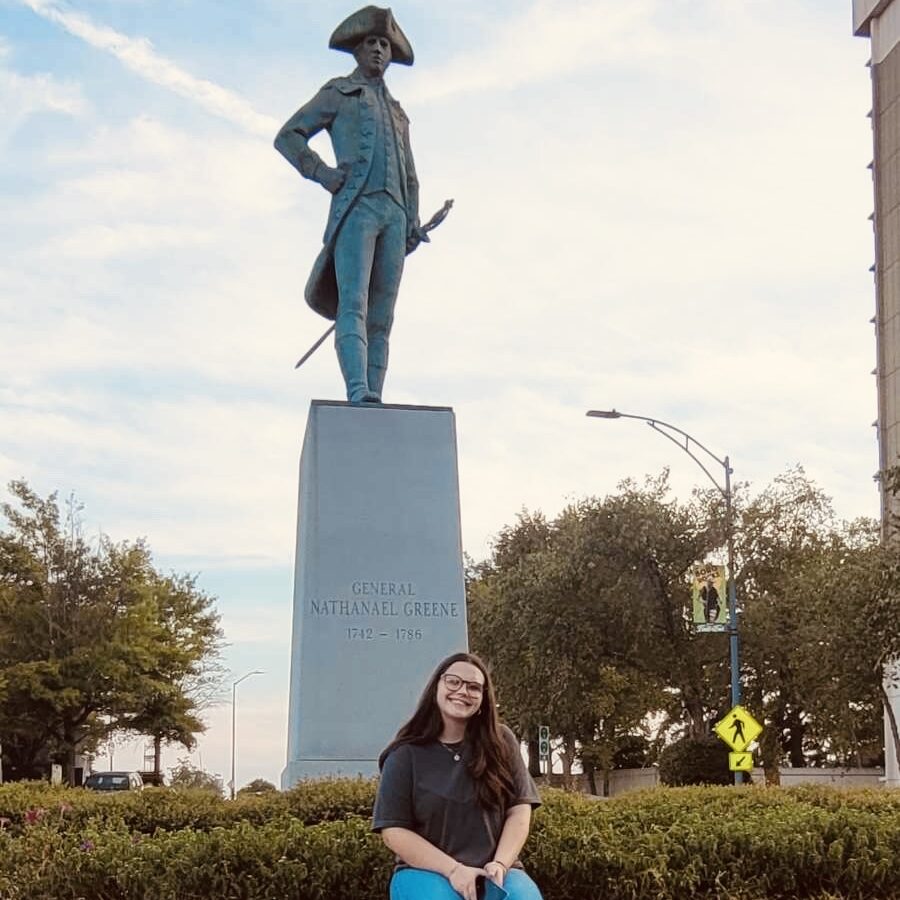
Cynthia Ward is a is a 16-year-old junior at West Columbus High School. She serves as the school’s poet laureate. She writes poetry inspired by her life, emotions, and experiences. She is also actively involved in FFA and plans to become an agriculture teacher, with hopes of returning to her community to inspire the next generation.
You were mentored by the poet Gideon Young; what has that experience been like for you? From what I’ve seen, you’ve got a talent for primarily free verse, but has learning from Young—a renowned haiku poet—influenced you or your style in any way?
Being mentored by Gideon Young has honestly been a really eye-opening experience. I mostly write free verse, I never really focused on structure the way haiku does, but learning from him has made me pay more attention to precision. Haiku is so intentional with every word, and that’s something I’ve started to carry into my own writing. Even if I’m not writing in that format, I think more about what each line is doing and how much meaning I can fit into fewer words.
I noticed that both you and Young are inspired by the natural world; he’s led workshops on Nature & The Arts, and you’re involved in agriculture education. How does nature feature in your poems?
Nature plays a big role in my poetry, especially because of my background in agriculture education. Being around plants, soil, and growth every day kind of shapes how I see things. I tend to use nature as a way to reflect emotions—like growth, decay, or change. It gives me a way to describe feelings without always directly saying them, which makes the poems feel more layered and real.
You’ve mentioned that your poetry often draws from your life—I’m curious, then, how has writing poetry made a difference in how you live? Does it allow you to make sense of your emotions, to “discover yourself,” in a sense? Or do you see writing poetry as separate from self-discovery?
Writing poetry has definitely changed how I live and think. It helps me process things I might not fully understand at first. Sometimes I don’t even realize how I feel about something until I write it down. I wouldn’t say poetry is completely separate from self-discovery—it’s actually a big part of it for me. It’s like a way of figuring myself out over time.
Even if your poems are confessional and personal, there’s still community to be found in making art. How do you conceive of poetry as tied to community? Has your laureateship influenced your conception of it?
Even though my poems can be really personal, I still think poetry is deeply connected to community. When you share something honest, other people can see themselves in it. Being a poet laureate has made that even more clear to me, because performing and sharing my work shows me how people respond and connect. It’s not just about me anymore—it’s about what others take from it too.
And speaking of your laureateship, how has that been going? What has it been like giving poetry performances and representing your high school?
My laureateship has been an amazing experience so far. Performing in front of people was nerve-wracking at first, but it’s also really rewarding. Representing my high school through poetry makes me feel proud, and it’s helped me grow more confident in my voice and in what I have to say.
You seem to have an eye for symbolism in your work. In one of your poems, the “old tarnish-colored necklace,” meant to represent a lost relationship or connection, “holds friction against our past.” What draws you to including these symbols in your work? What do you think is the effect of using a representative object—a necklace—rather than just saying “I’m tired of holding onto the past we shared”?
I’m really drawn to symbolism because it adds depth to what I’m trying to express. Using something like a necklace to represent a relationship makes the emotion feel more tangible. Instead of just stating a feeling, it gives the reader something to picture and interpret. I think it makes the poem more engaging and lets people connect in their own way.
There’s often an I/you relationship that features in your poems. In your writing process, do you think of the potential reader receiving your work? Or is it a more self-centered practice, cutting the Gordian knot of your emotions so to speak, on your own terms?
When I write, I don’t always think about the reader right away. It usually starts as something personal—just me trying to get my thoughts out. But after that, I do start to think about how it might be received and what others might take from it. So it’s kind of both personal and shared at the same time.
Generally, what does the writing process look like for you? Which emotions does it bring up for you?
My writing process isn’t super structured. Most of the time, I write when I feel something strongly—whether that’s stress, happiness, or even just reflection. I’ll start with a line or an image and build from there. It can bring up a lot of emotions, but that’s also what makes it meaningful.
I saw that you plan to release your first book of poetry soon. What has the process of publication been like? And—because I plan to get myself a copy—what are its main themes, and what do you enjoy most about it?
The process of putting together my first poetry book has been exciting but also a little overwhelming. Choosing which poems to include and organizing them into something that feels complete has taken a lot of thought. The main themes revolve around growth, identity, relationships, and change. What I enjoy most is seeing all my work come together into something bigger than just individual poems.
What are your other goals for 2026 as a writer and poet laureate? How has the GCDPS mentorship helped you on your way to attaining them?
For 2026, I want to continue growing as a writer, share my work with more people, and hopefully inspire others to write too. I also want to make the most out of being a poet laureate by connecting with my community. The GCDPS mentorship has really helped by giving me guidance, support, and opportunities I wouldn’t have had otherwise. It’s pushed me to take my writing more seriously and believe in what I can do.